
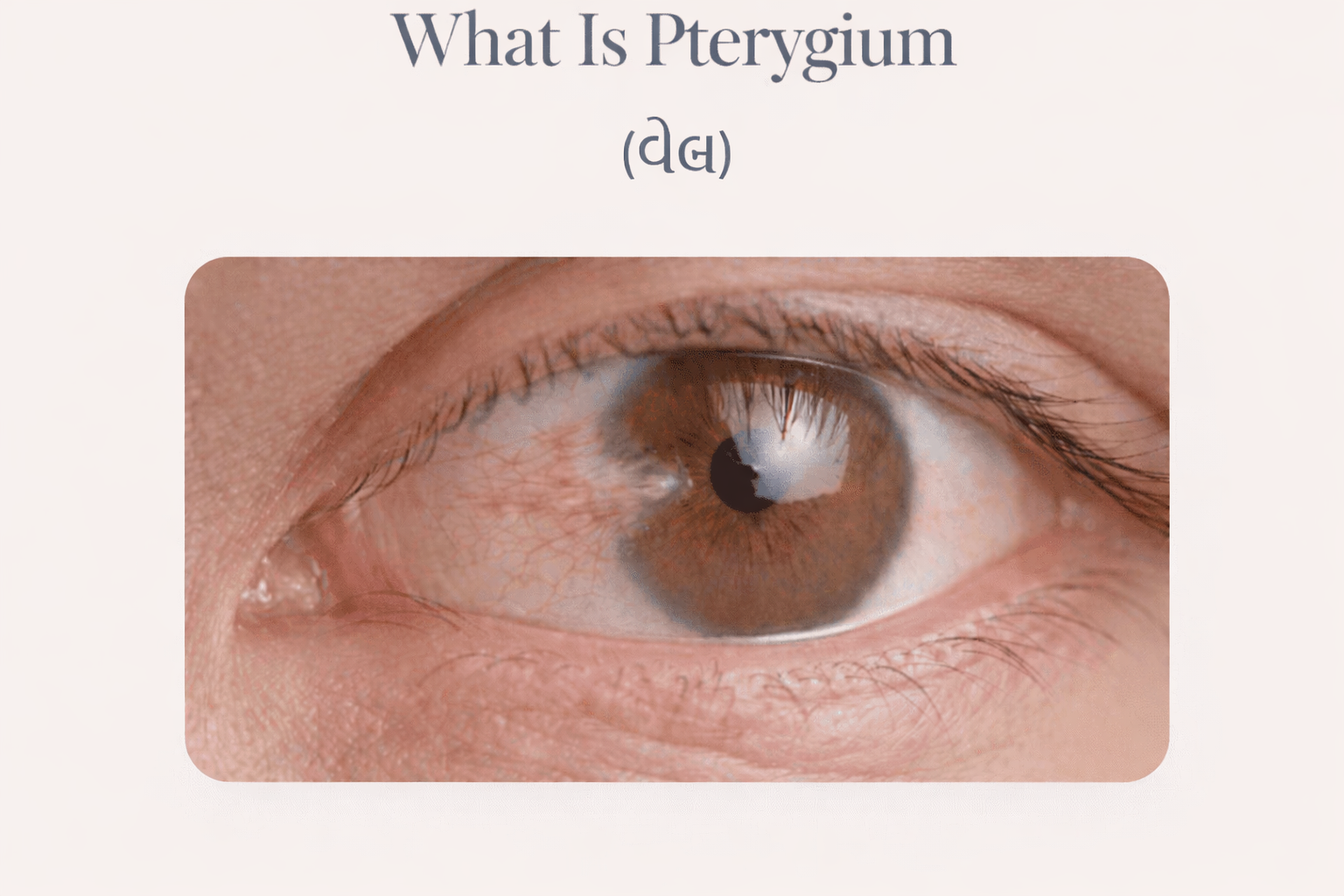
What Is Pterygium? (વેલ)
Pterygium is a non-cancerous, triangular growth of conjunctival tissue that extends from the white part of the eye (conjunctiva) onto the cornea.
It usually develops on the inner corner (near the nose) and may grow slowly over time.
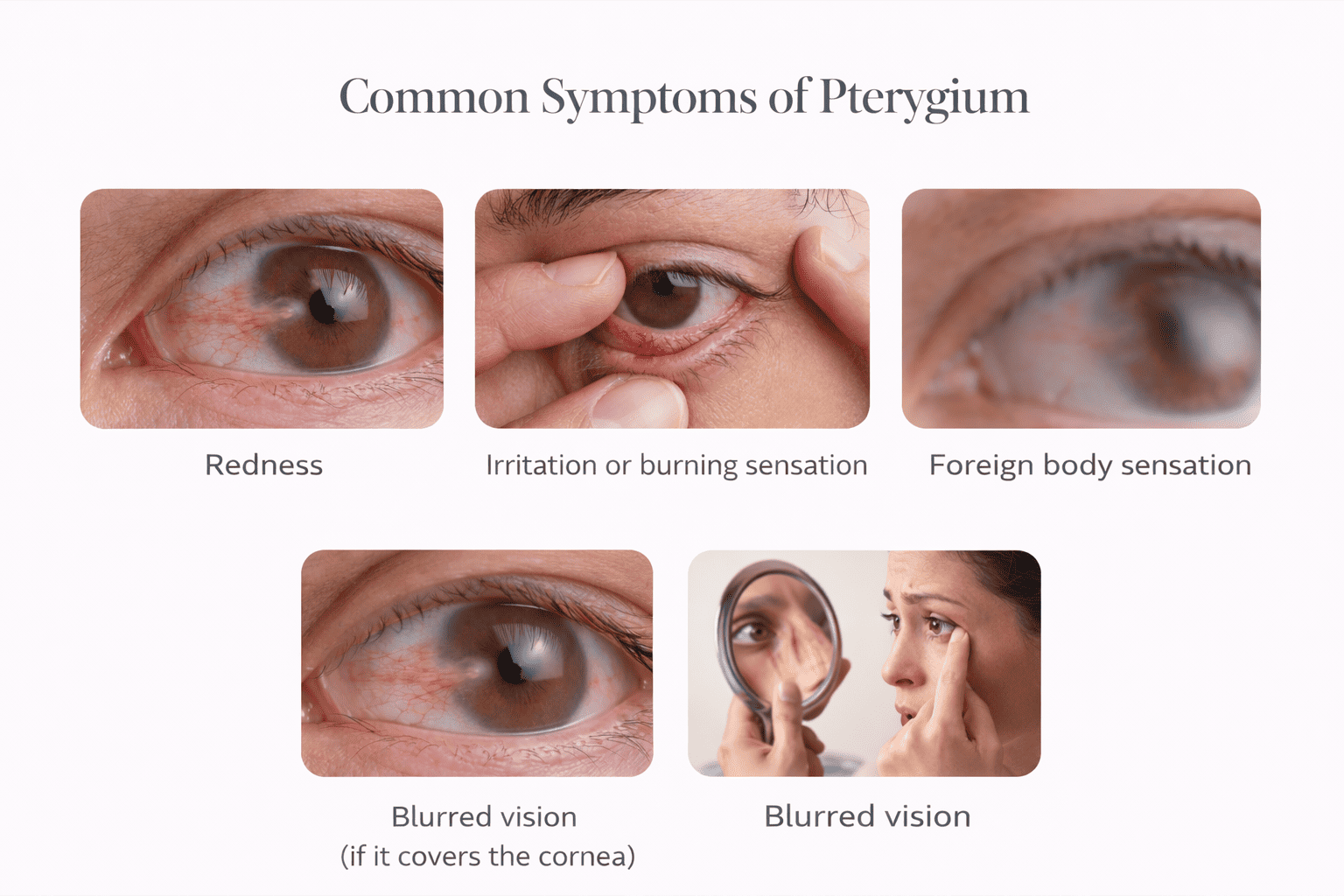
Common Symptoms of Pterygium
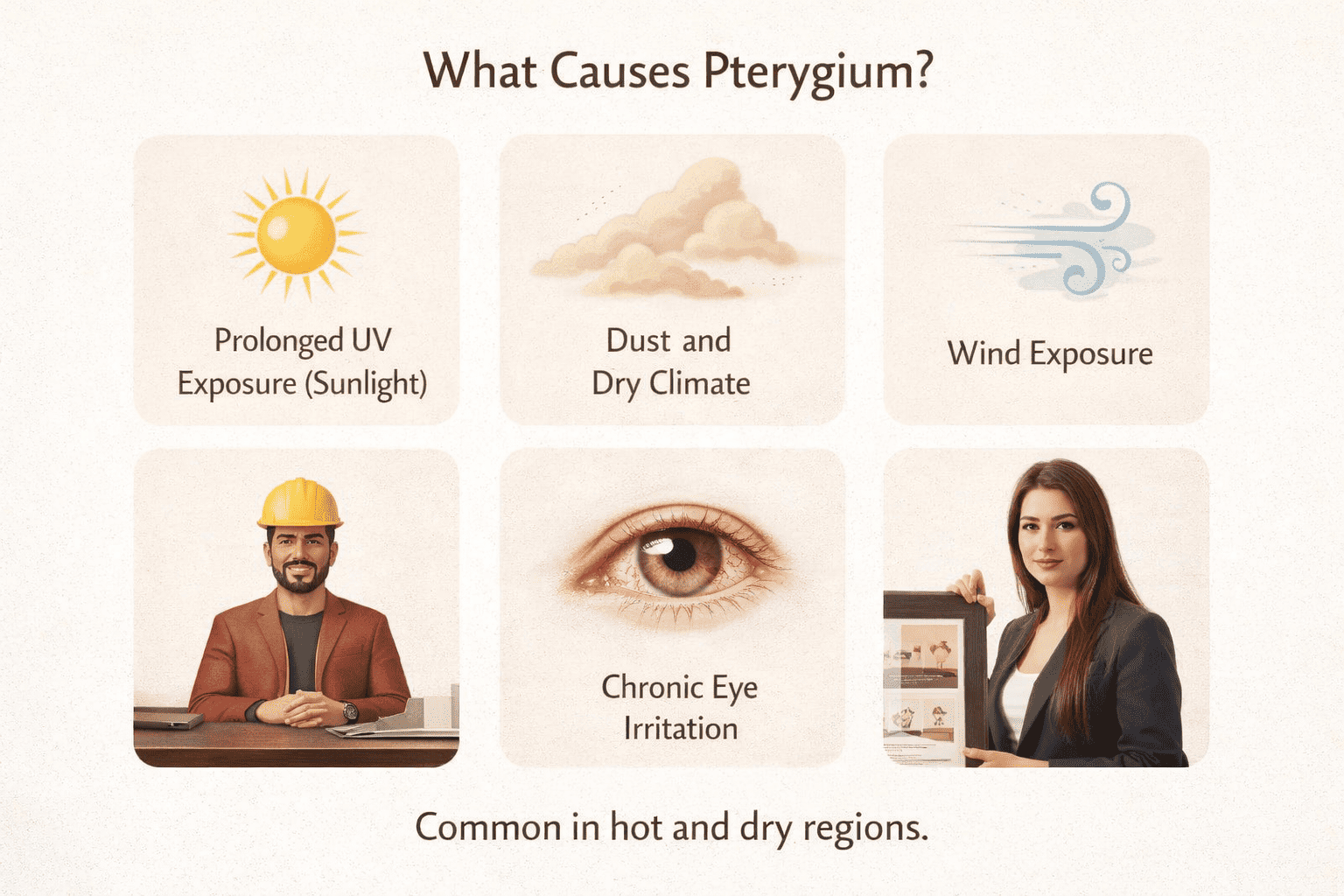
What Causes Pterygium
When Is Treatment Required?
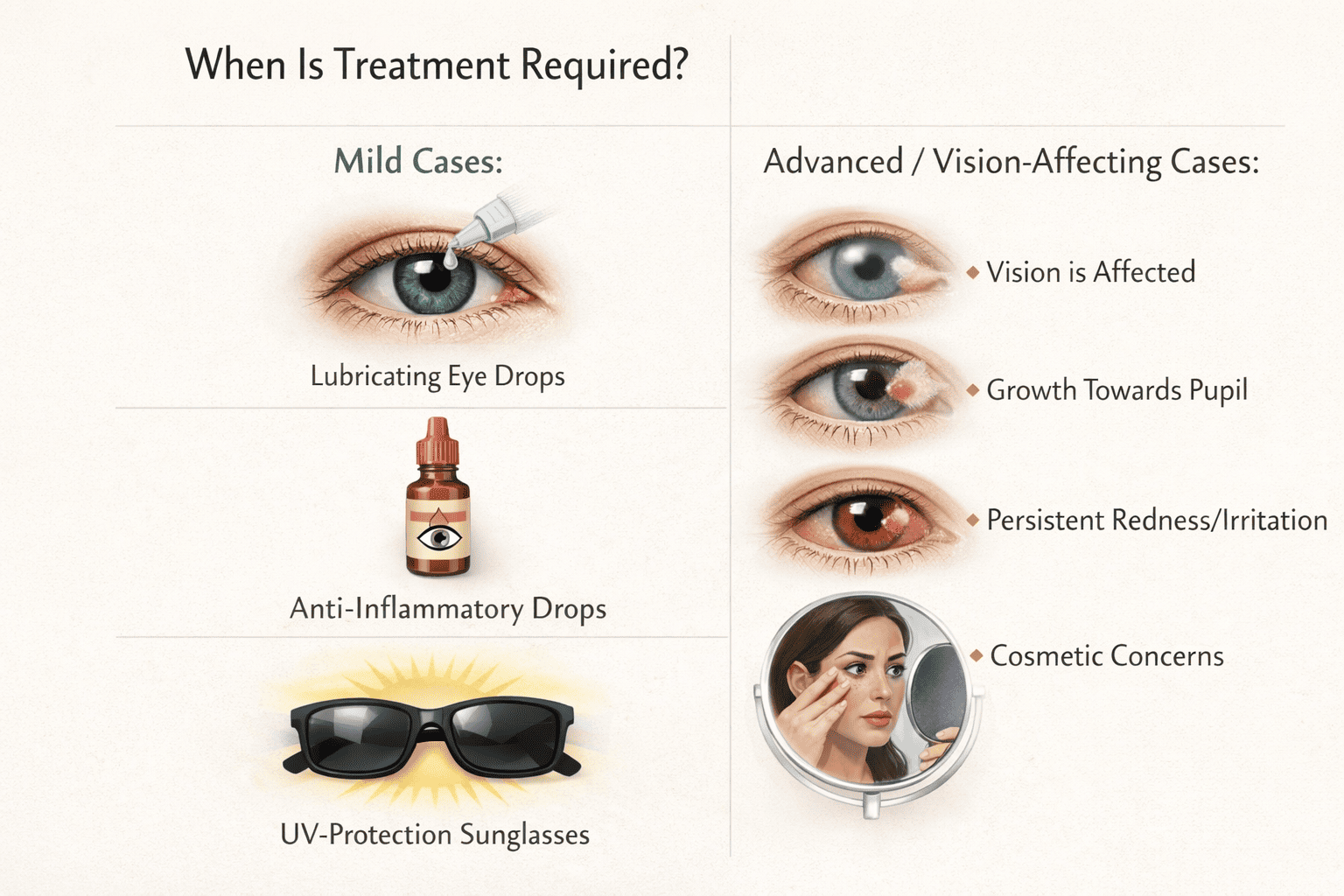
1. Mild Cases
- Lubricating eye drops
- Anti-inflammatory drops
- UV-protection sunglasses
2. Advanced / Vision-Affecting Cases
- Surgical removal is recommended when:
- Vision is affected
- Growth progresses toward pupil Persistent redness/irritation
- Cosmetic concerns
Recovery
- Mild redness for 2–4 weeks
- Avoid dust/sun exposure
- Use prescribed drops regularly
- Follow-up visits required Most patients resume routine activities within a few days.
Risks (Rare but Possible)
- Recurrence
- Temporary irritation
- Infection (very rare)
- Mild scarring
Prevention Tips
- Wear UV-protective sunglasses
- Use artificial tears in dry environments
- Avoid excessive dust exposure
FAQs - Pterygium (વેલ)
Pterygium is a non-cancerous, triangular growth of tissue that starts on the white part of the eye (conjunctiva) and can extend onto the cornea.
Small pterygium may not cause symptoms, but as it grows it can lead to redness, irritation, dryness, a gritty sensation, and blurred vision if it reaches the pupil.
It is mainly caused by prolonged exposure to UV rays, along with dust, wind, and dry or hot climates, especially in people who work outdoors without eye protection.
Treatment depends on severity; mild cases are usually managed with lubricating or anti-inflammatory drops and UV-protection sunglasses, while advanced cases may require surgical removal.
Yes, wearing UV-protection sunglasses, using protective eyewear in dusty or windy environments, and keeping the eyes well-lubricated can help reduce the risk of developing pterygium.

 ×
×