
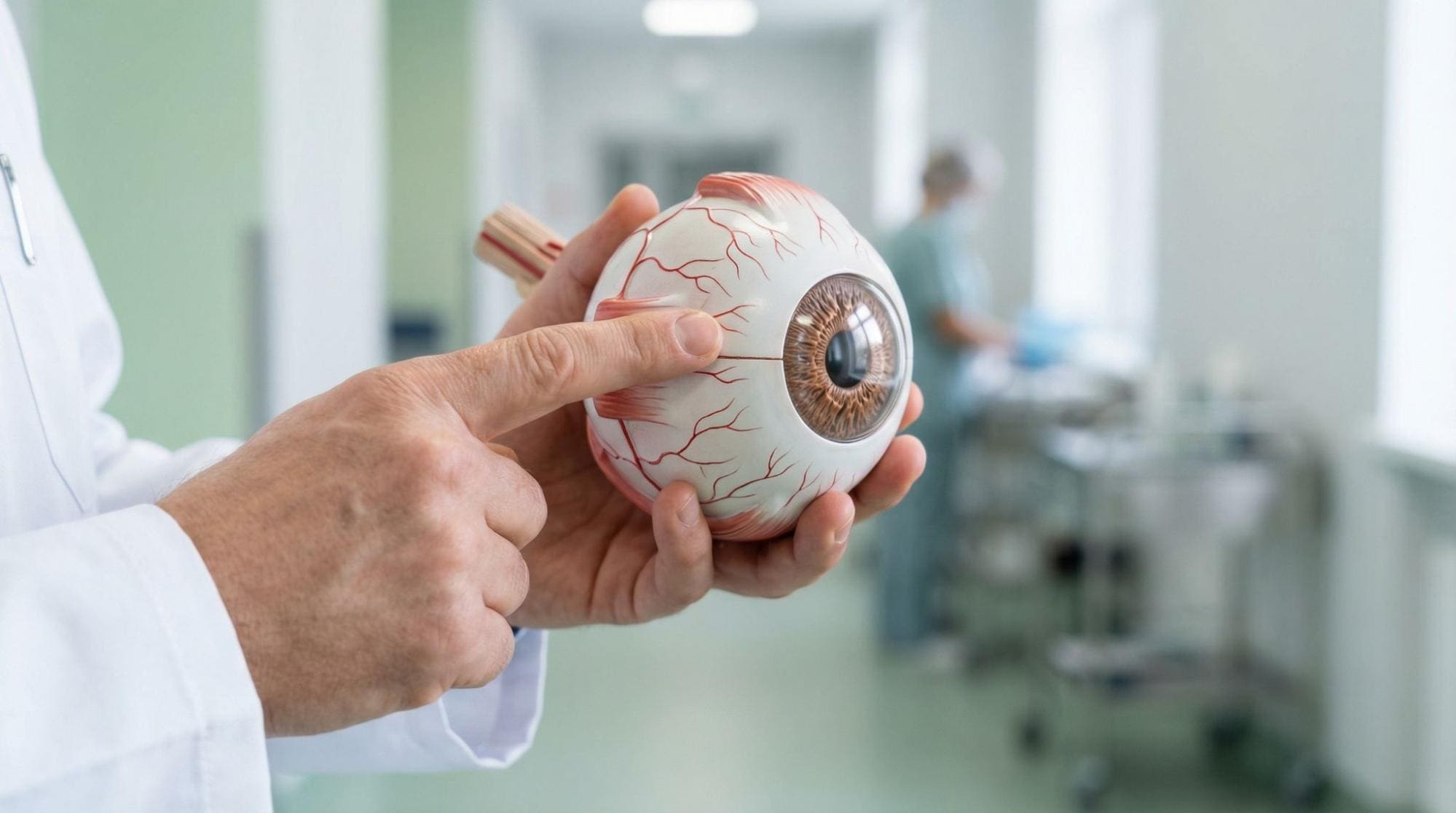
What is LASIK Surgery?(ચશ્મા દૂર કરવાની લેસર સર્જરી)
LASIK (Laser-Assisted In Situ Keratomileusis) is an advanced laser eye surgery used to correct refractive errors such as nearsightedness, farsightedness and astigmatism.
The procedure reshapes the cornea so that light focuses properly on the retina, resulting in clearer vision & reduced dependence on glasses or contact lenses.
LASIK is known for:
- Quick procedure
- Minimal discomfort
- Fast recovery
- Long-lasting results
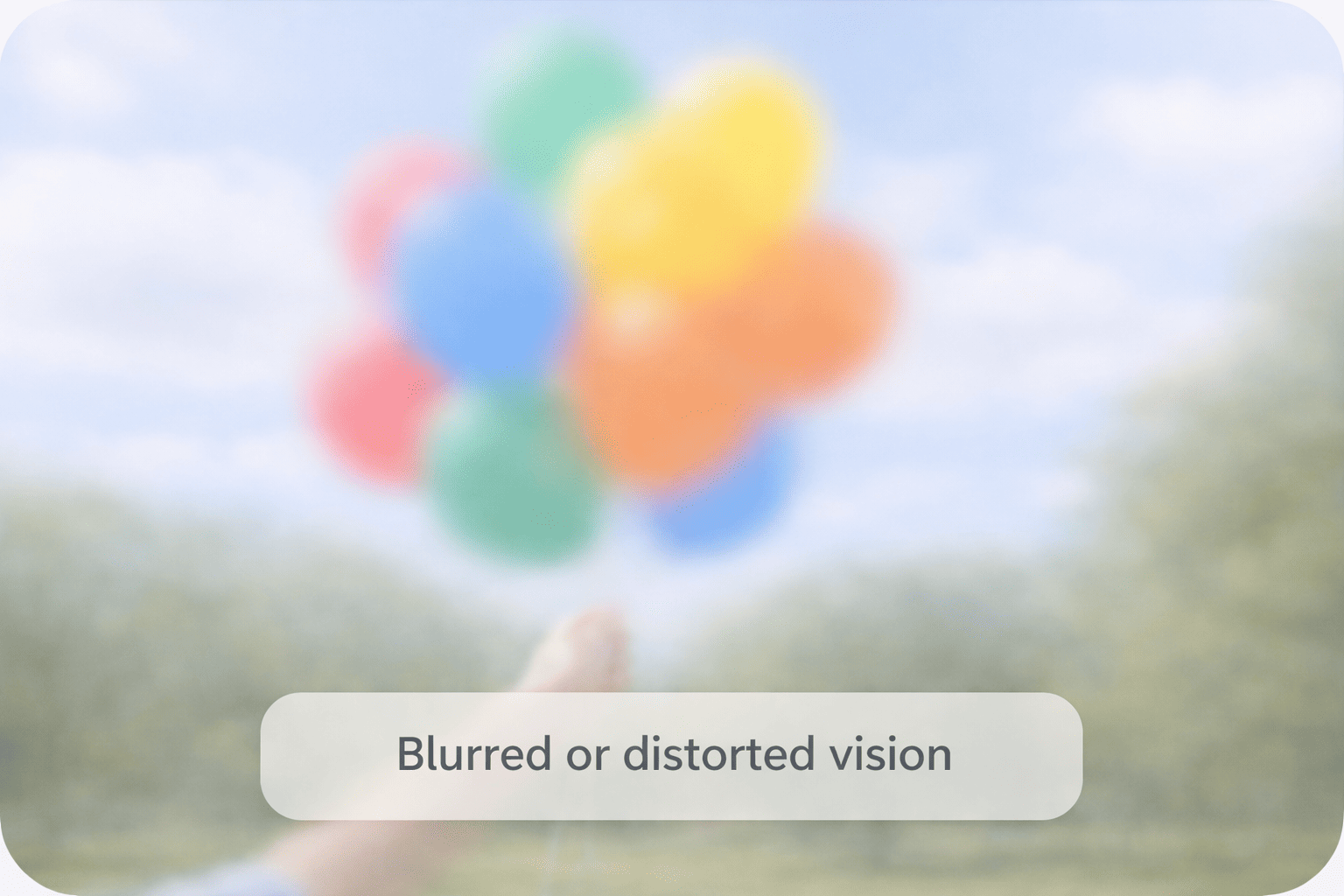
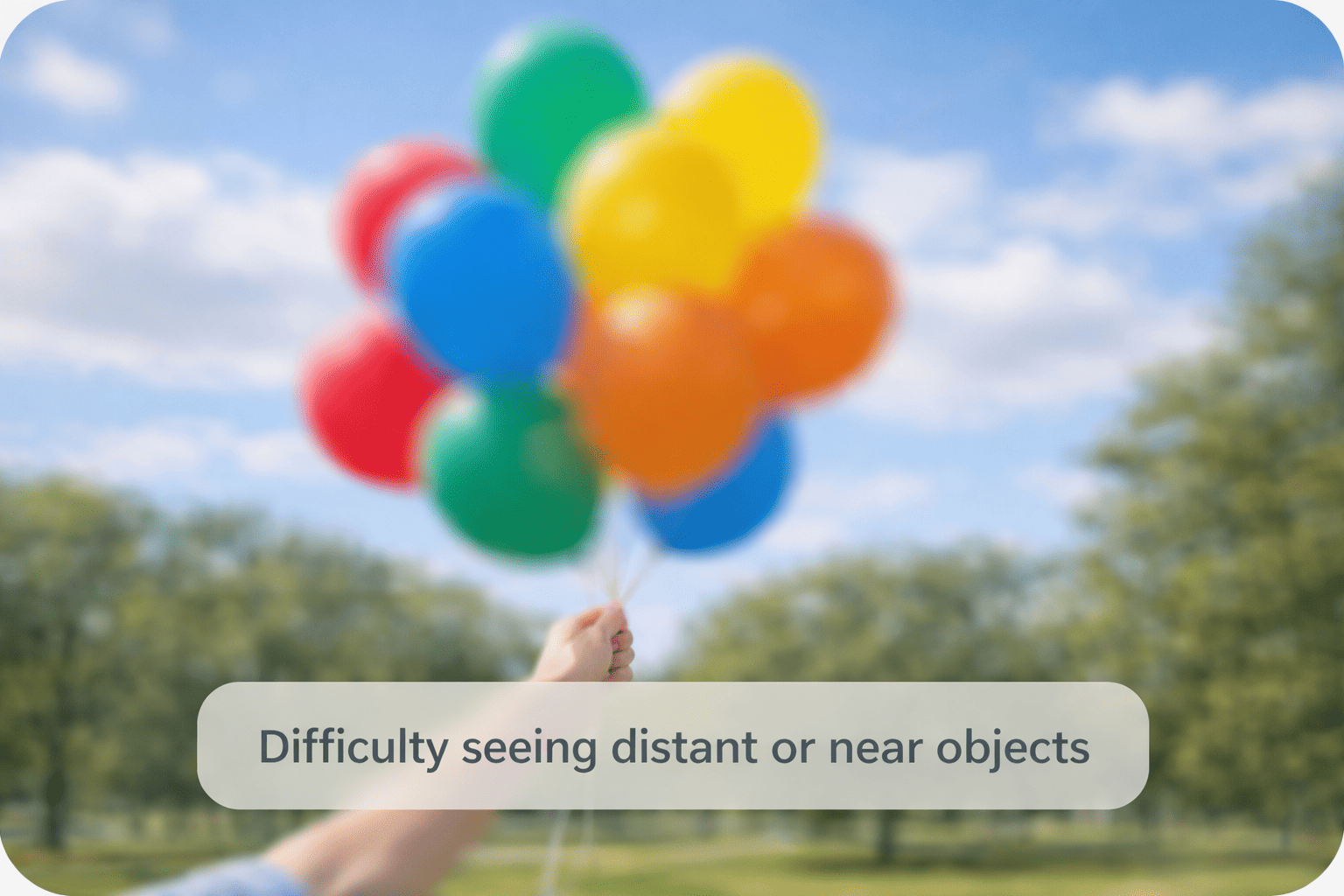
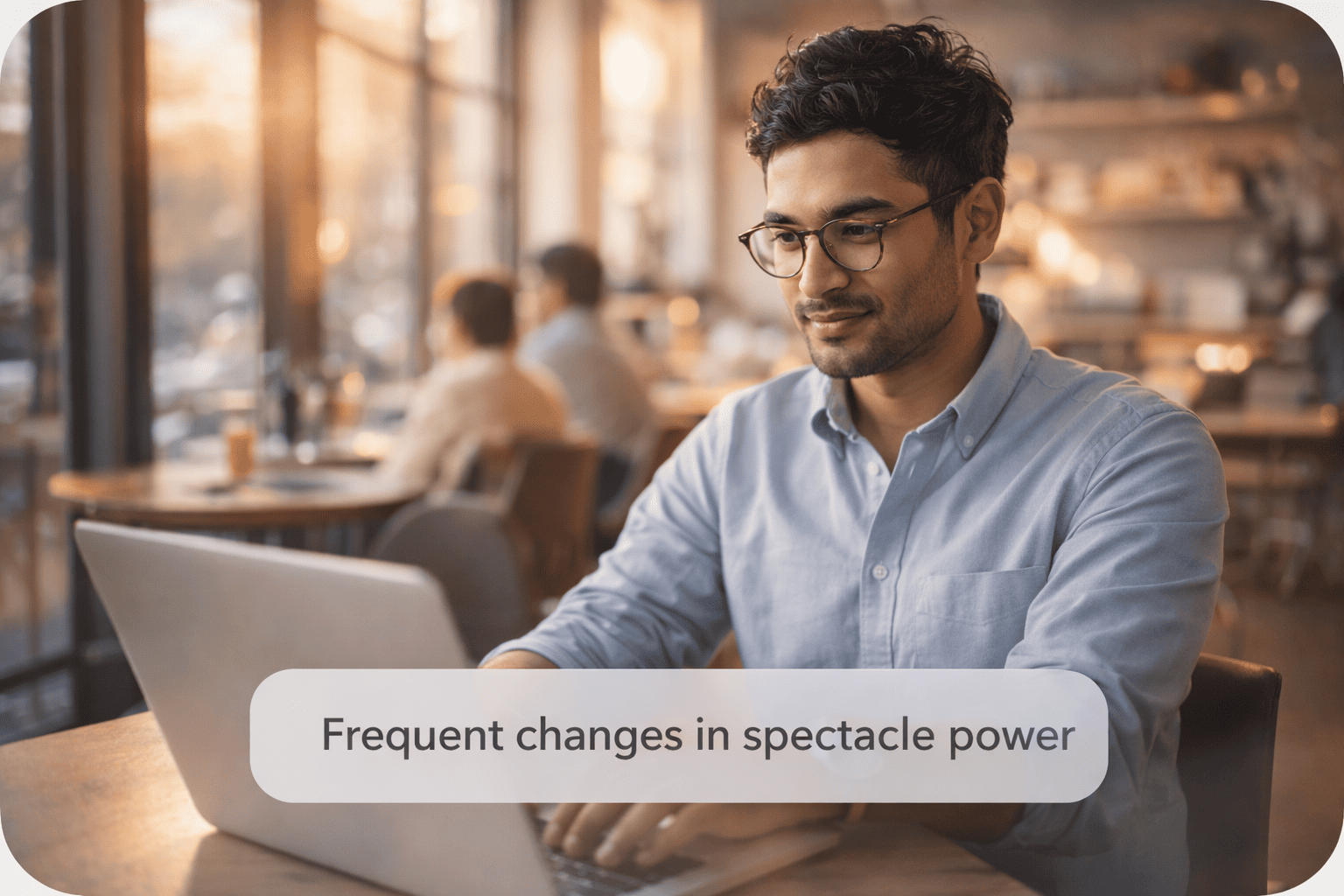
Symptoms that indicate you may need LASIK


Which Vision Problems Does LASIK Treat?
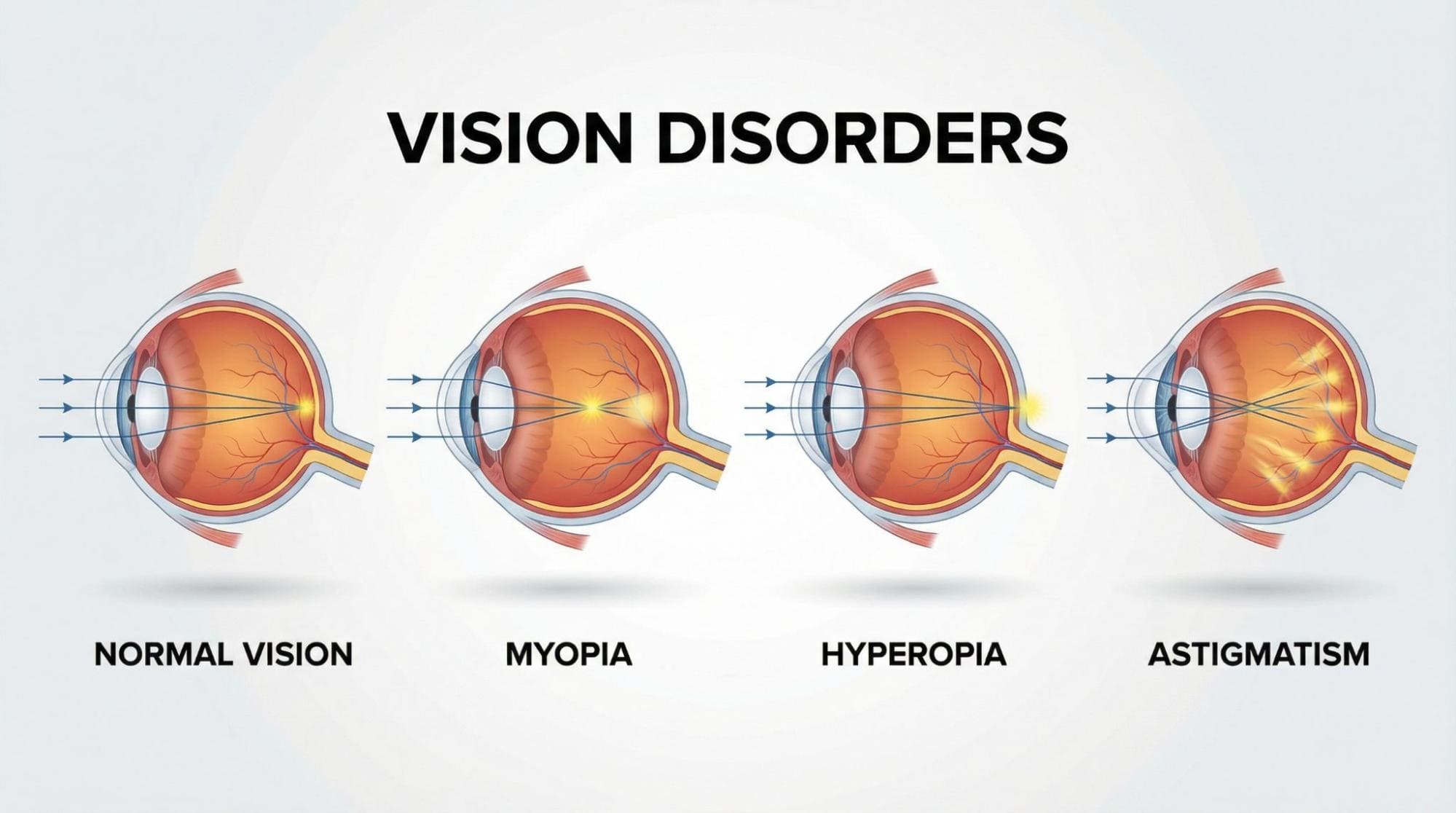
LASIK is commonly used to correct:
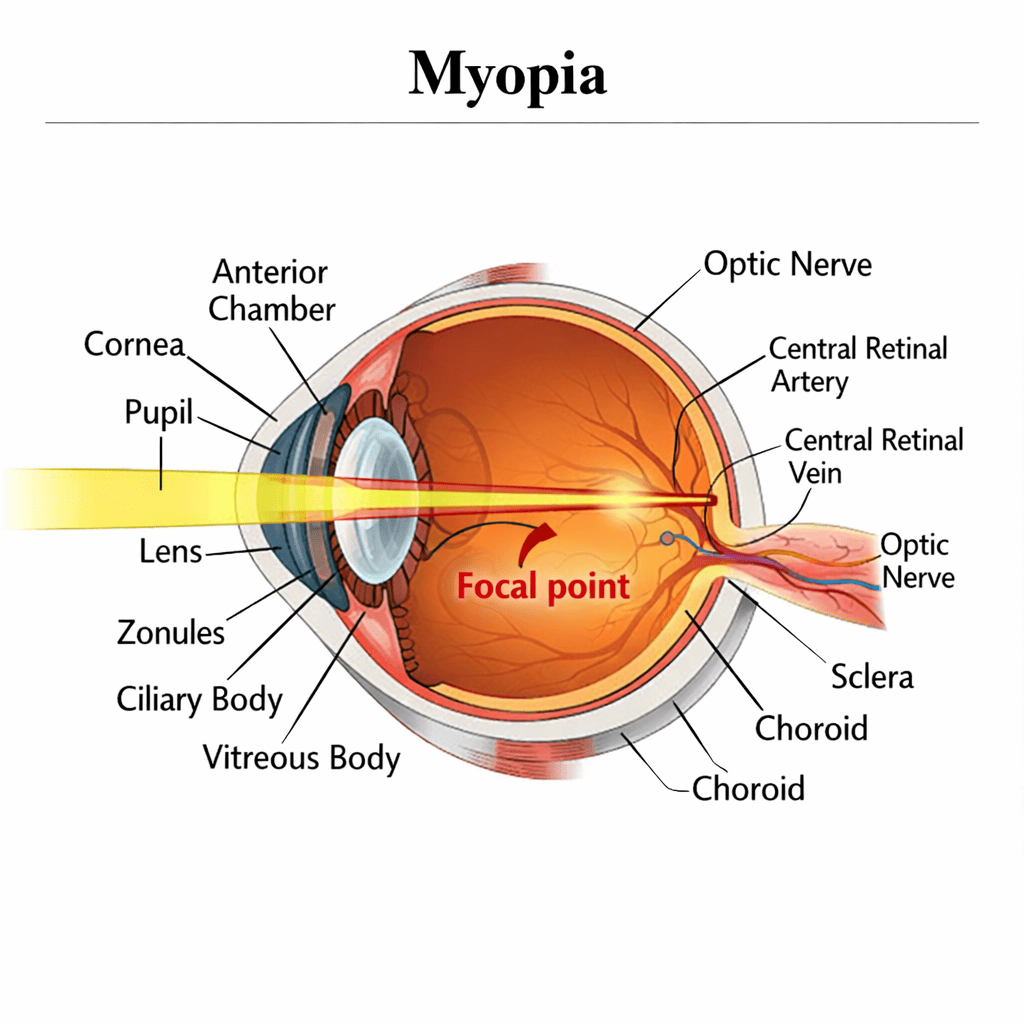
Nearsightedness (Myopia)
Difficulty seeing distant objects clearly.
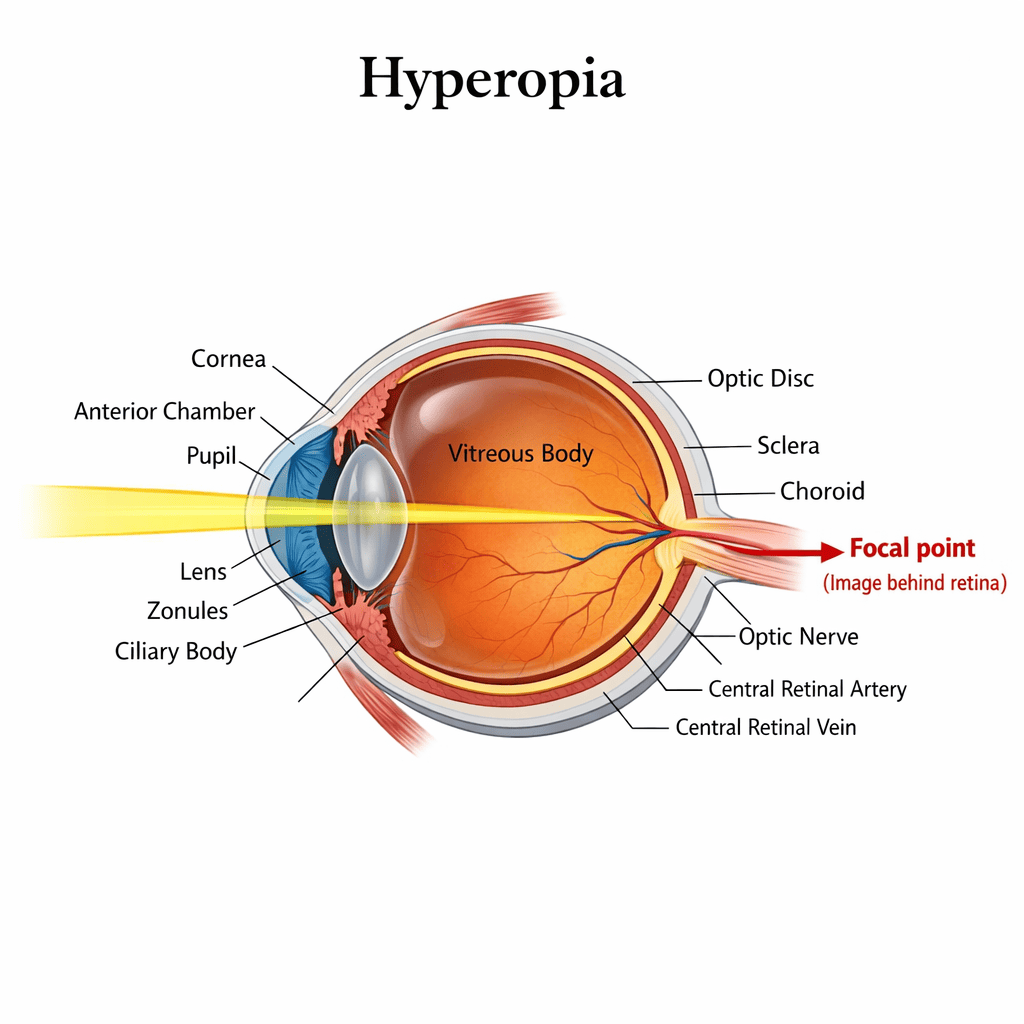
Farsightedness (Hyperopia)
Difficulty seeing nearby objects clearly.
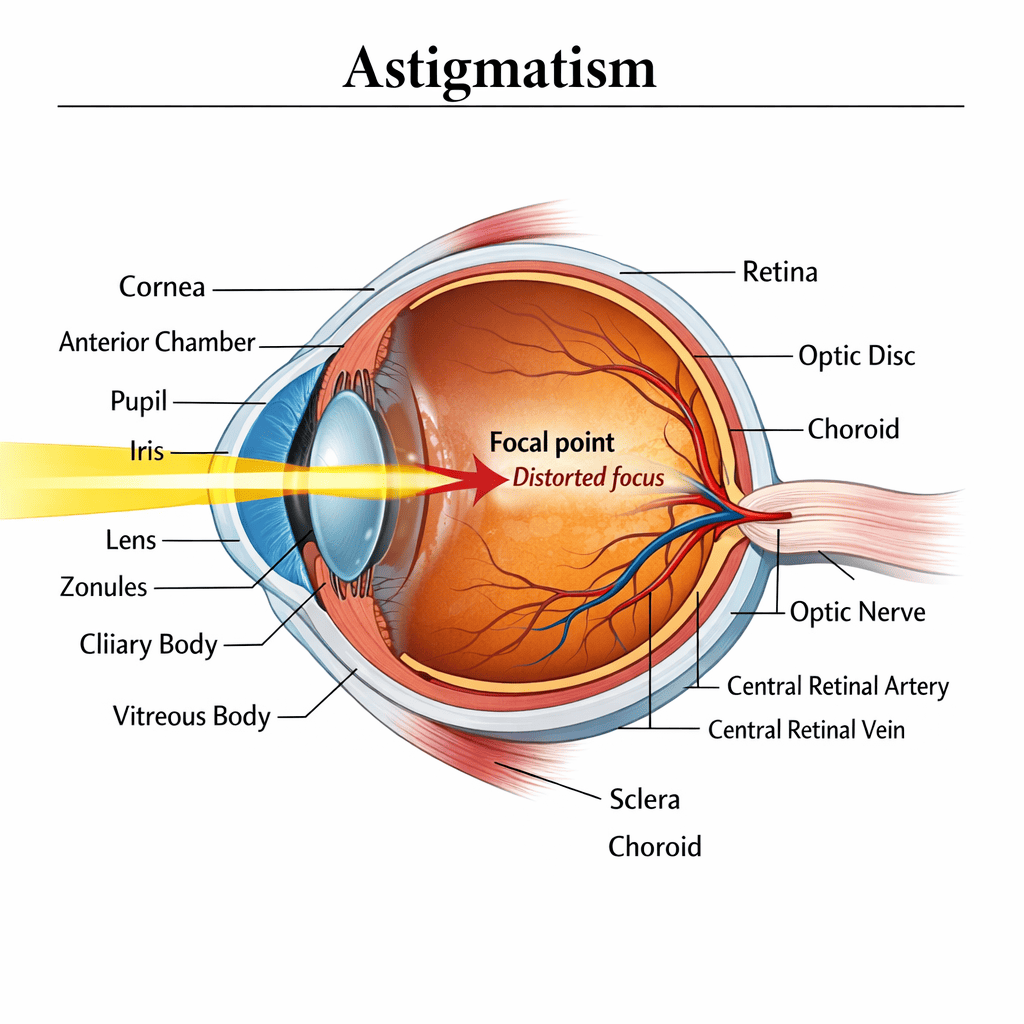
Astigmatism
Blurred vision due to irregular corneal shape.
LASIK Surgery Procedure
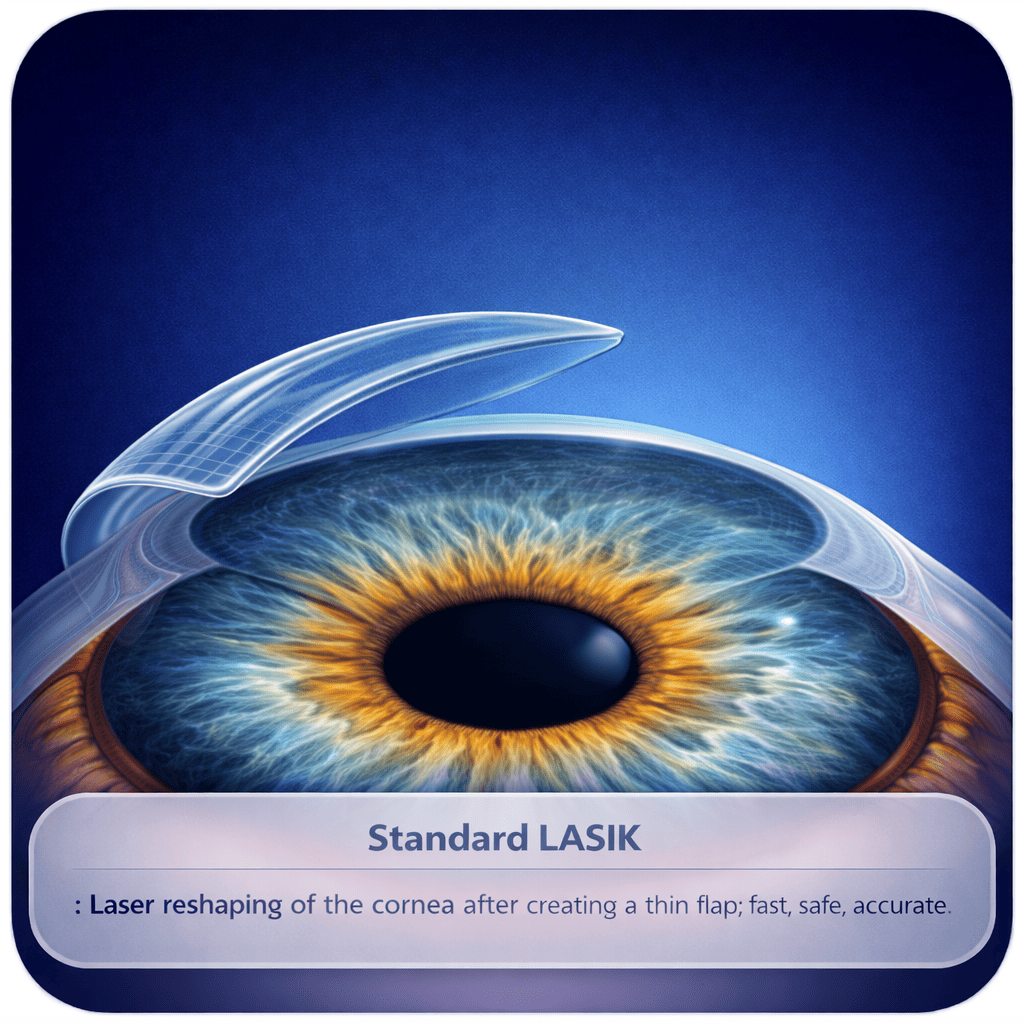
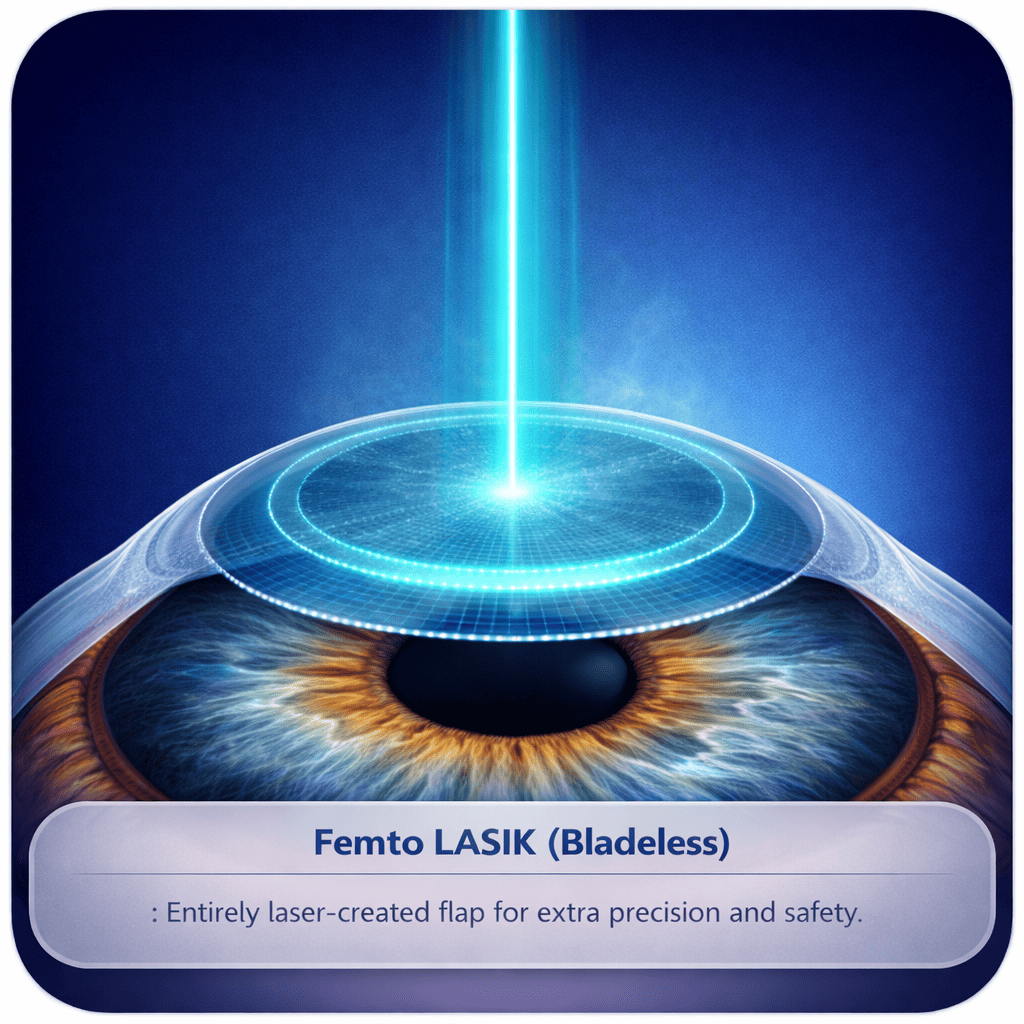
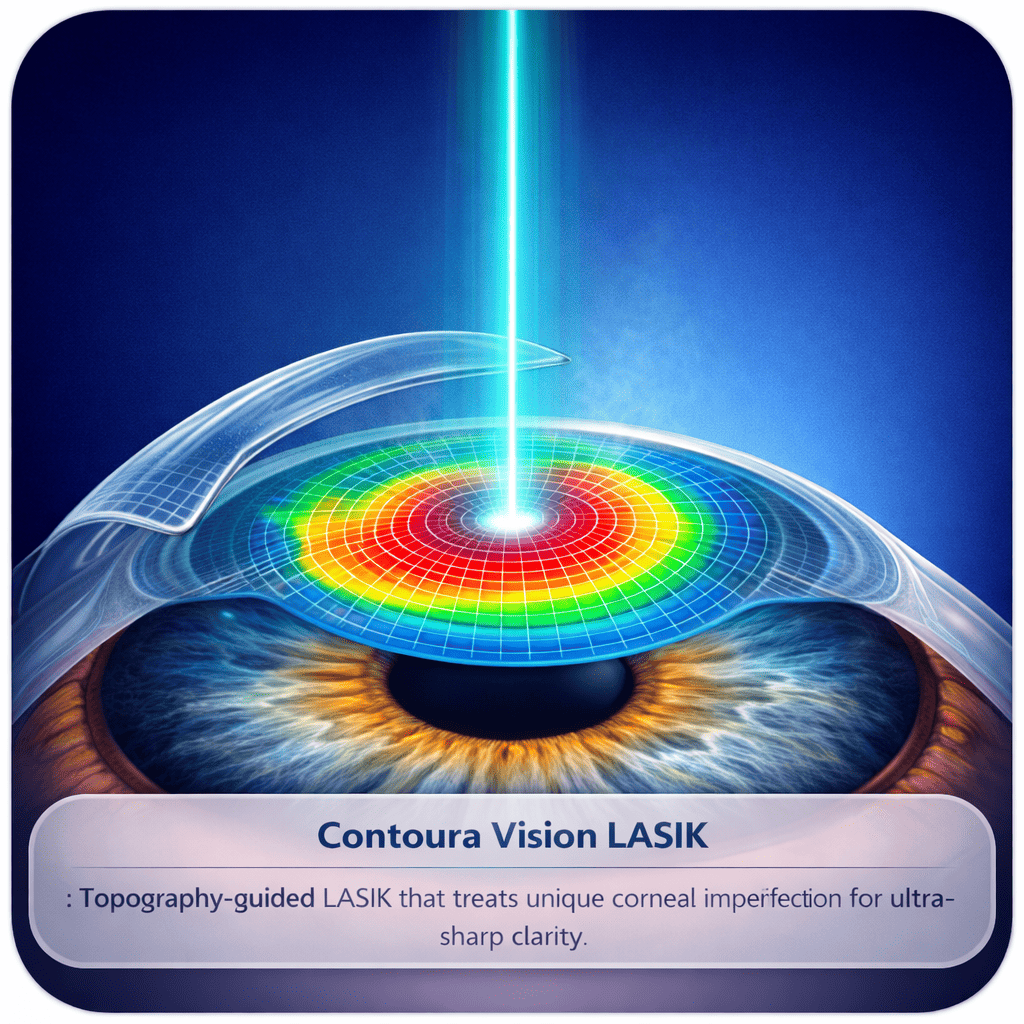
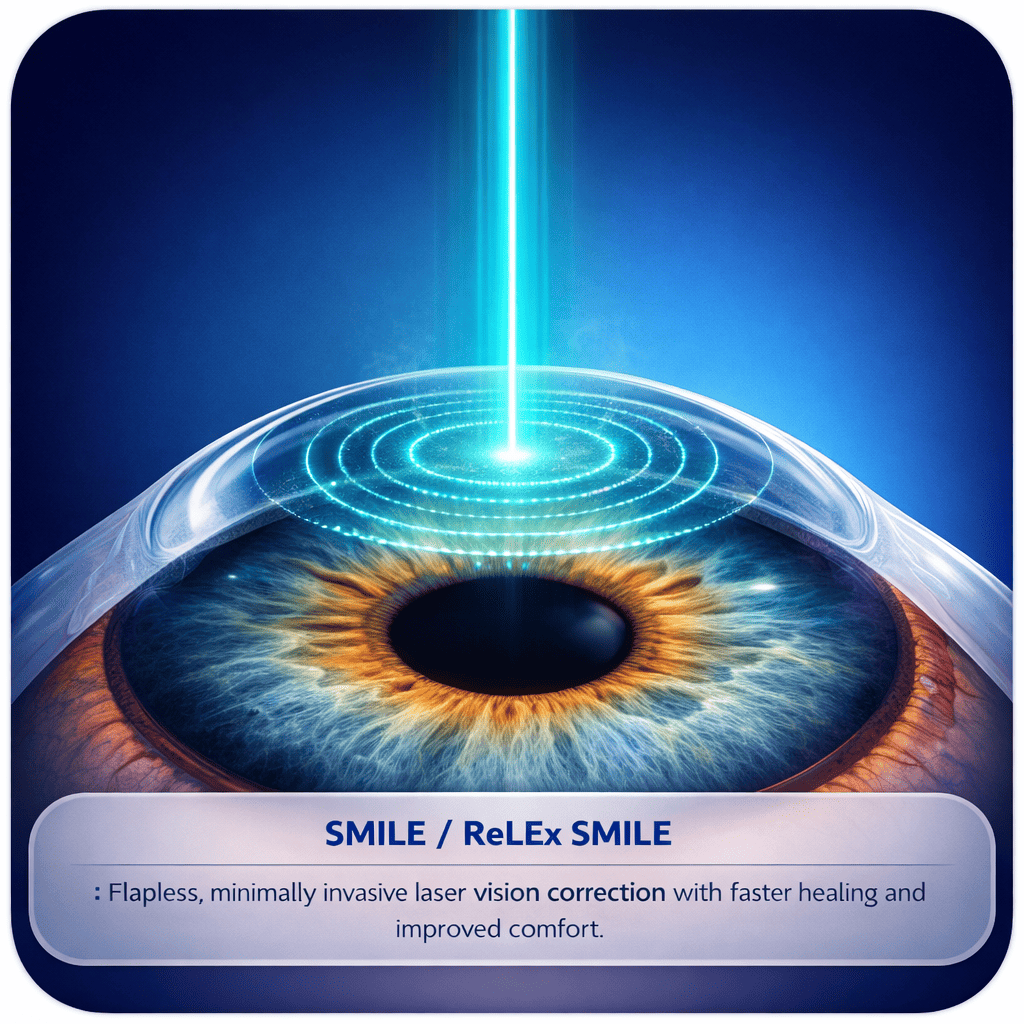
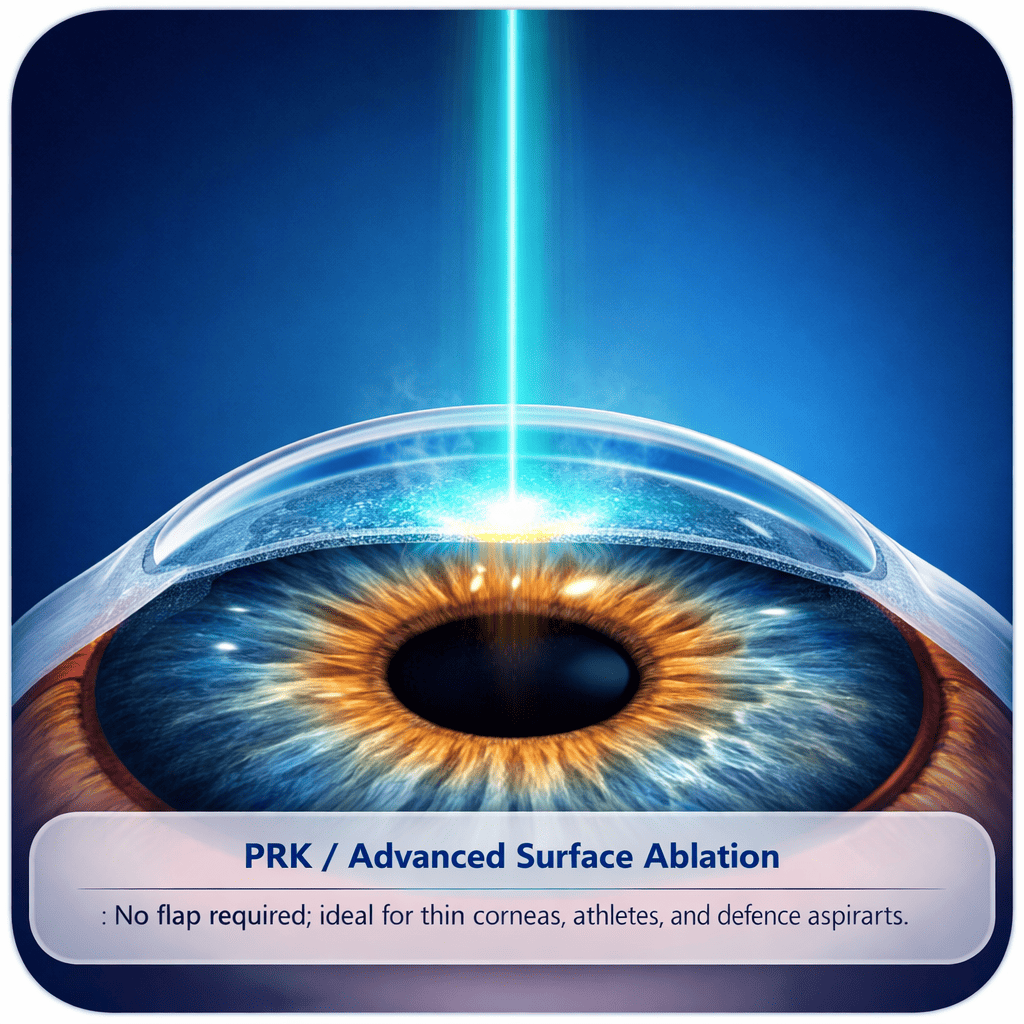
LASIK is typically completed within 15–30 minutes for both eyes.
The procedure includes:
- Application of numbing eye drops
- Creation of a thin corneal flap
- Laser reshaping of the cornea
- Flap repositioning for natural healing
Most patients notice improved vision within a few hours.
Who Is Not Suitable for LASIK?
LASIK may not be recommended for:
- People with very thin corneas
- Severe dry eye condition
- Unstable vision prescription
- Certain autoimmune diseases
A detailed eye evaluation is required to determine eligibility.
Types of LASIK
SILK LASIK – Advanced, bladeless, flap-free laser procedure offering high precision & faster recovery.
Flapless LASIK– Blade-free technique that avoids creating a traditional corneal flap, enhancing safety and comfort.
FAQ
No. Numbing drops are used and most patients feel only mild pressure.
About 15–30 minutes for both eyes.
Many patients notice clearer vision within a few hours.
Yes, corneal reshaping is permanent. However, age-related vision changes may occur later.
Usually above 18 years with a stable prescription for at least one year.

 ×
×