
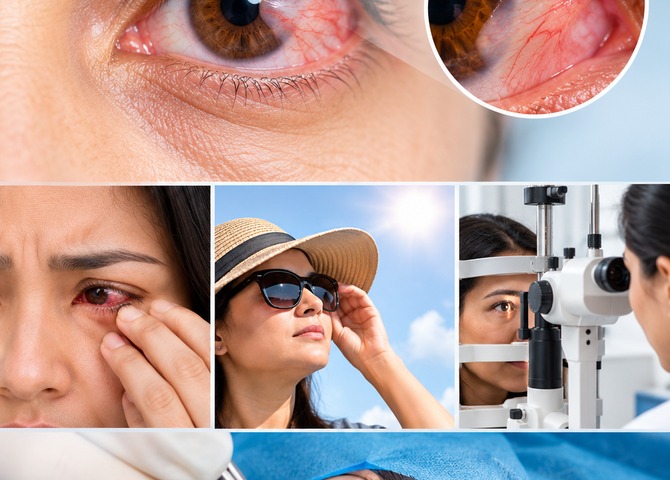
Pterygium: Causes, Symptoms, Early Signs & Treatment Options
Eye redness, irritation and a visible growth on the white part of the eye may sometimes indicate an eye condition known as Pterygium. It is commonly associated with long-term exposure to sunlight, ultraviolet (UV) rays, dust and wind. Although a small pterygium may not affect vision initially, its growth can gradually extend towards the cornea and cause visual disturbances.
Understanding the early signs of pterygium and seeking timely eye evaluation can help patients manage the condition and protect their eye health. This guide explains the causes, symptoms, diagnosis and available pterygium treatment options.
What Is Pterygium?
Pterygium is a non-cancerous growth of tissue that develops on the conjunctiva, the thin transparent membrane covering the white part of the eye. It can gradually extend onto the cornea, which is the clear front surface of the eye.
The growth often appears as a triangular or wing-shaped patch, usually starting from the inner corner of the eye near the nose. It may develop in one or both eyes.
In its early stages, pterygium may cause little or no discomfort. However, as it progresses, it can lead to redness, dryness, irritation and blurred vision. If the growth extends towards the central cornea, it may affect the quality of vision.
What Causes Pterygium?
Pterygium is associated with repeated exposure to environmental factors that irritate or damage the eye's surface. Long-term exposure to ultraviolet radiation is considered one of its major risk factors.
Some common causes and contributing factors include:
- UV Radiation: Spending extended periods outdoors without proper eye protection can increase exposure to harmful ultraviolet rays.
- Dust and Pollution: Regular exposure to dust, sand and airborne particles may irritate the ocular surface.
- Wind Exposure: Frequent exposure to strong winds can contribute to dryness and irritation.
- Dry and Hot Climate: People living in sunny, dry and tropical regions may have a higher risk.
- Outdoor Occupations: Farmers, construction workers, drivers and people working outdoors may experience prolonged exposure to sunlight and environmental irritants.
These factors can increase the risk of developing pterygium, although exposure does not mean that every individual will develop the condition.
Common Pterygium Symptoms
Pterygium symptoms can vary depending on the size, location and stage of the growth. Some people may notice only a visible change in the appearance of their eyes, while others experience persistent irritation.
Common symptoms include:
- Redness in the affected eye
- A visible fleshy or pinkish growth on the white part of the eye
- Dryness and burning sensation
- Itching or irritation
- A feeling of dust or a foreign particle inside the eye
- Excessive watering
- Blurred or distorted vision in advanced cases
If these symptoms continue or become more noticeable, an eye examination is recommended to identify the cause and determine whether treatment is needed.
Early Signs of Pterygium You Should Not Ignore
Recognising the early signs of pterygium can help patients seek an eye examination before the growth becomes more advanced.
Some early warning signs include:
- Small Growth on the White Part of the Eye: A small, raised or triangular patch may appear on the white surface of the eye, commonly near the nose.
- Frequent Eye Redness: The affected area may look red or irritated, particularly after spending time outdoors.
- Dryness and Foreign Body Sensation: Some people experience a gritty sensation, as if dust or a small particle is stuck in the eye.
- Repeated Eye Irritation: Burning, itching or watering may occur due to irritation of the eye's surface.
A visible growth should not be diagnosed based on appearance alone. An ophthalmologist can examine the eye and distinguish pterygium from other conditions that may look similar.
How Is Pterygium Diagnosed?
Pterygium is generally diagnosed through a comprehensive eye examination. An ophthalmologist examines the front surface of the eye to assess the growth, its location and how far it has extended onto the cornea.
The examination may include:
- Visual Acuity Test: Checks whether the condition has affected vision.
- Slit-Lamp Examination: Allows the eye specialist to examine the conjunctiva and cornea in detail.
- Corneal Assessment: Helps evaluate whether the growth is changing the shape or surface of the cornea.
- Progress Monitoring: Helps determine whether the pterygium is stable or gradually increasing in size.
Regular follow-up may be recommended depending on the size and progression of the growth.
Pterygium Treatment Options
The appropriate pterygium treatment depends on the severity of symptoms, the size of the growth and whether it is affecting vision.
Not every case requires surgery. Small or uncomplicated growths may be managed with observation and treatment to relieve irritation.
- Lubricating Eye Drops: Artificial tears or lubricating eye drops may help reduce dryness, burning and irritation associated with pterygium. They provide moisture to the eye's surface but do not remove the existing tissue growth.
- Prescription Eye Drops: If inflammation or redness is significant, an eye specialist may prescribe suitable anti-inflammatory medication, including steroid eye drops in selected cases. These medicines should only be used under medical supervision because inappropriate or prolonged use can cause complications.
- Regular Eye Monitoring: If the pterygium is small and does not affect vision, the ophthalmologist may recommend periodic examinations to monitor its size and progression.
- Pterygium Surgery: Surgical removal may be considered when the growth continues to increase, causes persistent discomfort, affects vision or creates significant cosmetic concerns.
During pterygium surgery, the abnormal tissue is removed from the eye's surface. In many cases, a conjunctival autograft technique may be used, in which a small piece of healthy conjunctival tissue is placed over the area from which the growth was removed.
The choice of surgical technique depends on the patient's condition and the surgeon's assessment. Pterygium can sometimes recur after surgery, so postoperative care and regular follow-up are important.
Can Pterygium Be Prevented?
Although pterygium cannot always be prevented, protecting the eyes from environmental exposure may help reduce the risk and limit further irritation.
Consider the following precautions:
- Wear sunglasses that provide 100% UVA and UVB protection when outdoors.
- Use protective eyewear in dusty or windy environments.
- Wear a wide-brimmed hat to reduce direct sunlight exposure.
- Use lubricating eye drops when recommended by an eye specialist.
- Avoid rubbing your eyes frequently.
- Schedule regular eye examinations, particularly if you have noticed a visible growth.
These measures support general eye protection and are especially useful for people who spend considerable time outdoors.
When Should You Consult an Eye Specialist?
A small pterygium may not cause serious problems initially, but it should not be ignored if it changes in size or begins affecting vision.
Consider consulting an ophthalmologist if you notice:
- A growing tissue-like patch on the white part of your eye
- Persistent redness or irritation
- Frequent dryness or watering
- Blurred or distorted vision
- Discomfort that does not improve with routine eye care
Early evaluation helps determine whether observation, medication or surgical treatment may be appropriate.
Comprehensive Pterygium Care at Venus Eye Hospital, Ahmedabad
Pterygium requires proper evaluation to understand the extent of tissue growth and its effect on the cornea and vision. The right treatment approach depends on individual eye health, symptoms and the progression of the condition.
At Venus Eye Hospital, Ahmedabad, patients can seek guidance for eye examination and the assessment of conditions affecting the cornea and ocular surface. Under the guidance of Dr. Richa Patel, patients can discuss their symptoms and understand suitable eye care and treatment options based on their clinical evaluation.
If you notice redness, irritation or a visible growth on your eye, consider scheduling an eye examination. Timely assessment can help you understand the condition and make informed decisions about your eye health.
FAQ
Pterygium is a non-cancerous growth of tissue on the conjunctiva, the thin membrane covering the white part of the eye. It can gradually extend onto the cornea and may affect vision in advanced cases.
Early signs include a small triangular or fleshy growth on the white part of the eye, redness, dryness, itching and a sensation of having dust in the eye.
Prolonged exposure to ultraviolet (UV) rays, sunlight, dust, wind and dry environmental conditions are common risk factors associated with pterygium.
Yes. If the growth extends towards the central cornea or changes its shape, it can cause blurred or distorted vision.
Mild cases may be managed with lubricating eye drops and prescribed medication to relieve irritation and inflammation. However, these treatments do not remove the tissue growth.
No. Lubricating or prescribed eye drops may help control dryness, redness and irritation, but they cannot eliminate an existing pterygium.
Surgery may be recommended when the growth continues to increase, affects vision, causes persistent discomfort or creates significant cosmetic concerns. An ophthalmologist can determine whether surgery is appropriate.
Yes. Pterygium can sometimes recur after surgical removal. The risk depends on several factors, including the surgical technique and individual healing response.
Wear UV-protective sunglasses, use a wide-brimmed hat outdoors, protect your eyes from dust and wind, and follow your eye specialist's advice.
Yes. Patients in Ahmedabad can consult an ophthalmologist for pterygium evaluation and discuss suitable management options, including observation, medication or surgery.

 ×