
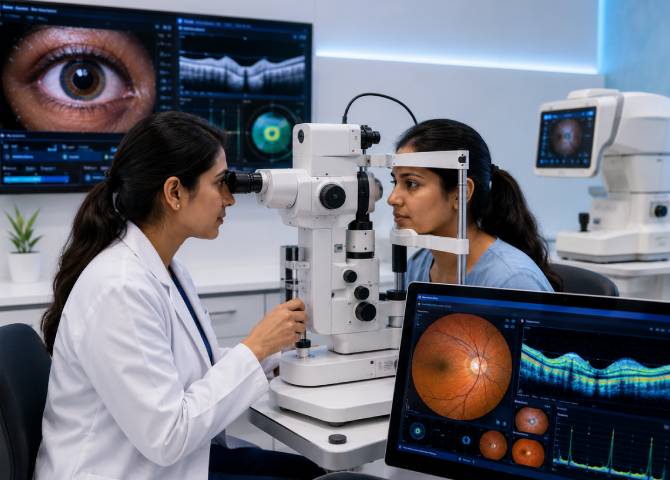
The Next Generation of Eye Care: Exploring Modern Diagnostic Advances
Eye care has evolved significantly with advancements in medical technology. Today, eye specialists can use sophisticated diagnostic tools to examine different structures of the eye, identify potential problems, monitor changes over time, and support more personalized treatment planning.
Modern diagnostic technology has become an important part of comprehensive eye care because many eye conditions can develop gradually without causing noticeable symptoms in their early stages. A detailed eye examination supported by appropriate diagnostic tools can provide valuable information about overall eye health and vision.
At Venus Eye Hospital, Dr. Richa Patel and the ophthalmology team focus on comprehensive eye evaluation and patient-centered care supported by modern diagnostic approaches.
Why Do Modern Eye Diagnostics Matter?
A routine vision check may determine whether you need glasses or a change in your prescription, but a comprehensive eye examination can provide much more information.
Modern diagnostic techniques can help eye specialists evaluate areas such as:- Visual acuity and refractive status
- Cornea and other front structures of the eye
- Lens health
- Retina and macula
- Optic nerve
- Eye pressure
- Overall structural changes within the eye
The specific diagnostic tests recommended depend on a patient's symptoms, age, medical history, risk factors, and the findings of the initial examination.
Advanced Technology Supports More Detailed Eye Evaluation
The development of modern ophthalmic technology has improved the way eye specialists examine and monitor different eye conditions.
Instead of relying on a single test, ophthalmologists can combine clinical examination with appropriate diagnostic imaging and measurements. This provides a more complete picture of an individual's eye health.
Some commonly used modern diagnostic approaches include advanced imaging, digital eye examinations, and specialized measurements designed to assess specific structures of the eye.
Optical Coherence Tomography (OCT)
Optical Coherence Tomography, commonly known as OCT, is an advanced imaging technique that can produce detailed cross-sectional images of eye structures.
It can be particularly useful when evaluating the retina, macula, and optic nerve. The detailed images may help an ophthalmologist identify structural changes and monitor them over time.
OCT may be used as part of the evaluation and follow-up of various retinal and optic nerve-related conditions when clinically appropriate.
Digital Retinal Examination
The retina plays an important role in vision because it receives light and sends visual information through the optic nerve to the brain.
Digital retinal imaging allows eye-care professionals to capture detailed images of the back of the eye. These images can support documentation and comparison during follow-up examinations.
Retinal evaluation can be especially important for patients with risk factors for retinal or systemic conditions that may affect the eyes.
Eye Pressure Assessment
Measuring intraocular pressure is an important component of evaluating eye health.
Changes in eye pressure can be associated with certain eye conditions, including glaucoma. However, eye pressure is only one part of a glaucoma assessment, and an ophthalmologist may use additional examinations and tests to evaluate the optic nerve and visual field.
Regular monitoring can be particularly important for individuals who have been identified as being at increased risk.
Corneal Evaluation
The cornea is the transparent outer surface at the front of the eye and plays an important role in focusing light.
Modern diagnostic methods can help specialists assess corneal shape, thickness, and other characteristics when required. Such information can be useful in evaluating certain corneal conditions and when assessing patients for specific vision-correction procedures.
A detailed corneal evaluation helps an eye specialist determine the most appropriate approach based on individual eye characteristics.
Visual Field Testing
Vision is not limited to what you see directly in front of you. Peripheral or side vision is also an important part of visual function.
Visual field testing helps assess the extent of a person's field of vision and can be useful when evaluating certain optic nerve and neurological concerns.
The results can also help an ophthalmologist monitor changes over time when repeated testing is clinically indicated.
Early Detection Through Comprehensive Eye Examinations
One of the major benefits of modern diagnostic technology is the ability to examine eye structures in greater detail.
Some eye diseases may progress without obvious symptoms during their early stages. A person may feel that their vision is normal while changes are developing inside the eye.
Regular comprehensive eye examinations can therefore play an important role in identifying potential concerns before significant vision problems develop.
The need for regular examinations varies from person to person. Age, family history, existing eye conditions, general health, symptoms and other risk factors may influence how frequently an eye examination is recommended.
Technology and Personalized Eye Care
Modern eye care is not simply about having access to advanced machines. Technology becomes most useful when combined with professional clinical expertise and appropriate interpretation of diagnostic findings.
An ophthalmologist considers the patient's symptoms, examination results, medical history, and diagnostic findings before deciding on the next step.
This approach allows eye care to become more personalized rather than relying on a one-size-fits-all solution.
Modern Diagnostic Eye Care at Venus Eye Hospital
At Venus Eye Hospital, modern diagnostic approaches are incorporated into comprehensive eye-care services to support detailed evaluation and informed treatment planning.
Dr. Richa Patel focuses on understanding each patient's individual vision and eye-health needs. Depending on the clinical situation, appropriate diagnostic examinations may be recommended to evaluate vision and different structures of the eye.
From routine eye examinations to the assessment of specific eye concerns, a comprehensive approach can help patients better understand their eye health and available treatment options.
When Should You Consider an Eye Examination?
You should consider scheduling an eye examination if you experience symptoms such as:- Blurred or fluctuating vision
- Difficulty seeing clearly at different distances
- Frequent headaches associated with vision
- Eye pain or persistent discomfort
- Increased sensitivity to light
- Persistent redness or irritation
- Difficulty adjusting between different lighting conditions
- Sudden changes in vision
- New flashes or floaters
Even without noticeable symptoms, routine eye examinations can be valuable because certain eye conditions may not cause obvious warning signs in their early stages.
The Future of Eye Care
The future of ophthalmology continues to be shaped by improvements in diagnostic imaging, digital technology, artificial intelligence-assisted analysis, and other innovations.
These developments may provide eye-care professionals with increasingly detailed information and help improve the ability to monitor changes over time.
However, technology remains a tool that works alongside professional medical judgment. A qualified ophthalmologist is essential for interpreting findings and determining what they mean for an individual's eye health.
The Future of Eye Care
Modern diagnostic advances have transformed the way eye specialists evaluate and monitor eye health. From detailed retinal imaging and OCT to eye pressure measurements, corneal assessment, and visual field testing, today's diagnostic tools can provide valuable insights into different aspects of vision and ocular health.
Regular eye examinations remain one of the most important steps toward protecting your vision. If you are experiencing vision changes or simply want to understand your eye health better, a professional evaluation can help identify the appropriate next steps.
At Venus Eye Hospital, Dr. Richa Patel and the eye-care team are committed to combining clinical expertise with modern diagnostic approaches to provide comprehensive and personalized eye care.
Schedule an eye examination at Venus Eye Hospital and take a proactive step toward understanding and protecting your vision.

 ×
×