
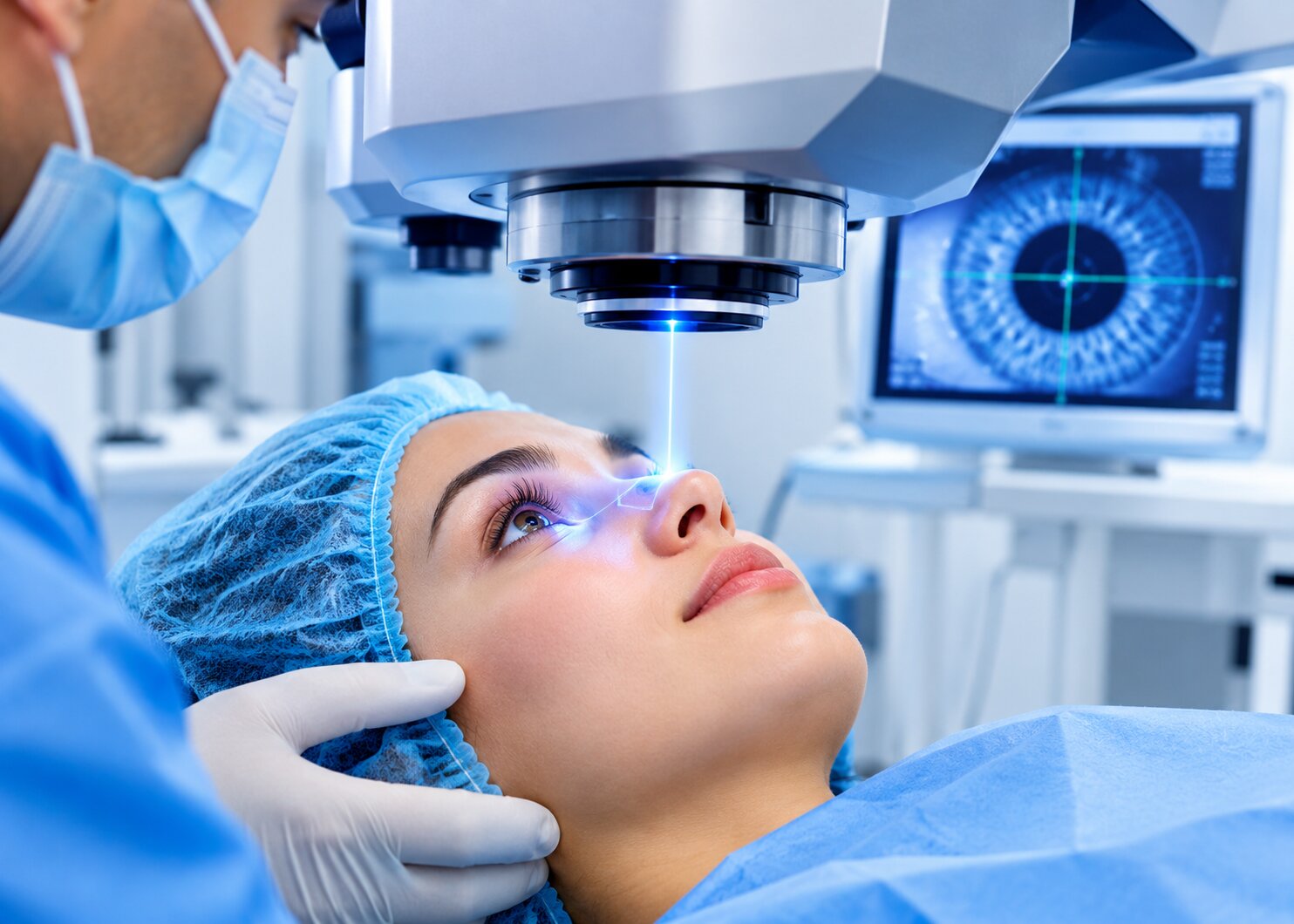
LASIK Surgery: Types, Benefits, Cost, Eligibility, Risks & Recovery – A Complete Guide
Wearing spectacles or contact lenses every day can sometimes become inconvenient, especially for people with active lifestyles, demanding work schedules, or outdoor activities. LASIK surgery is a widely used vision correction procedure that helps reduce dependence on glasses and contact lenses by reshaping the cornea with laser technology.
LASIK, which stands for Laser-Assisted In Situ Keratomileusis, is a type of refractive eye surgery used to correct common vision problems such as myopia (nearsightedness), hyperopia (farsightedness), and astigmatism. Understanding its types, benefits, eligibility, cost, possible risks, and recovery process can help individuals make informed decisions about their eye health.
With proper evaluation and guidance from an experienced ophthalmologist, patients can understand whether laser vision correction is suitable for their eyes.
What Is LASIK Surgery and How Does It Work?
LASIK surgery is a vision correction procedure that uses a specialised laser to reshape the cornea, the transparent front surface of the eye. The cornea plays an important role in focusing light onto the retina. When its shape causes light to focus incorrectly, a person may experience blurred vision.
During LASIK, the surgeon creates a thin flap in the cornea and uses an excimer laser to reshape the underlying corneal tissue. The flap is then repositioned, allowing the cornea to heal naturally.
LASIK eye surgery is commonly performed to correct:
- Myopia or nearsightedness
- Hyperopia or farsightedness
- Astigmatism or cylindrical power
The suitability of the procedure depends on individual eye measurements, corneal thickness, eye health, and refractive stability.
Different Types of LASIK and Laser Vision Correction
Several laser vision correction techniques are available. The appropriate option depends on the patient's prescription, corneal condition, and detailed eye examination.
1. Traditional LASIK Surgery
Traditional LASIK uses a specialised instrument to create a thin corneal flap, followed by laser reshaping of the cornea. It is designed to correct common refractive errors and reduce dependence on spectacles.
2. Femto LASIK Surgery
Femto LASIK uses a femtosecond laser to create the corneal flap instead of a mechanical blade. It allows laser-assisted flap creation and is an option for selected patients based on their eye examination.
3. Contoura Vision
Contoura Vision is a topography-guided laser vision correction approach that uses detailed corneal mapping to guide treatment. It may be considered for suitable patients after evaluating corneal shape and other clinical factors.
4. SMILE Eye Surgery
Small Incision Lenticule Extraction (SMILE) is a minimally invasive laser vision correction procedure. It removes a small piece of corneal tissue through a small incision and is commonly used for selected patients with myopia and astigmatism.
5. PRK (Photorefractive Keratectomy)
PRK is another laser vision correction procedure in which the surface layer of the cornea is removed before laser reshaping. It may be considered when LASIK is unsuitable for certain corneal conditions.
The choice between LASIK, Femto LASIK, Contoura Vision, SMILE, and PRK should always be based on a professional assessment rather than selecting a procedure based only on popularity or price.
Benefits of LASIK Surgery
LASIK surgery offers several potential benefits for individuals who want to reduce their dependence on spectacles or contact lenses.
Some commonly recognised benefits include:
- Reduced Dependence on Glasses: Many suitable patients experience improved vision without regularly needing spectacles.
- Quick Procedure: LASIK is generally performed as a short outpatient procedure.
- Faster Visual Recovery: Many patients notice improved vision within the first day, although complete visual stabilisation may take longer.
- Improved Convenience: Reduced dependence on glasses can make daily activities, sports, and travel more convenient.
- Correction of Common Refractive Errors: LASIK can correct selected cases of myopia, hyperopia and astigmatism.
However, results vary between individuals, and some patients may still need glasses for certain activities or as they age.
Who Is Eligible for LASIK Surgery?
Not everyone is suitable for laser eye surgery. A detailed eye examination is necessary to determine whether the procedure is appropriate.
Generally, potential LASIK candidates should have:
- Stable eye power for an appropriate period.
- Healthy corneas with sufficient thickness.
- No significant untreated eye conditions.
- A suitable age, generally 18 years or older.
- Realistic expectations about the results.
People with very thin corneas, unstable prescriptions, certain corneal disorders, uncontrolled dry eyes, or some other eye conditions may not be suitable for LASIK.
A LASIK eligibility assessment may include corneal thickness measurement, corneal topography, refractive power testing, tear film evaluation, and a comprehensive eye examination.
LASIK Surgery Cost in Ahmedabad: What Affects the Price?
The LASIK surgery cost in Ahmedabad can vary depending on the technology used, the patient's eye condition, and the treatment requirements.
Several factors influence the overall LASIK operation price:
- Type of Procedure: Traditional LASIK, Femto LASIK, Contoura Vision, and other laser correction techniques may have different costs.
- Technology and Equipment: The laser platform and diagnostic technology used can influence treatment expenses.
- Eye Power and Clinical Requirements: Individual refractive conditions and treatment planning may affect the procedure.
- Both Eyes or One Eye: The treatment plan and quoted package may differ depending on whether one or both eyes are treated.
- Pre- and Post-Operative Care: Diagnostic tests, medications, follow-up visits, and other care requirements may contribute to the total expense.
People searching for LASIK surgery cost in Ahmedabad, chashma hatane ka operation price, or LASIK operation no kharch should request a personalized cost estimate after an eye examination.
LASIK surgery is generally considered an elective vision correction procedure. The overall treatment cost depends on the type of procedure, technology used, individual eye condition, and diagnostic requirements. Patients should consult the hospital to understand the applicable treatment cost and procedure details before making a decision.
Risks and Possible Side Effects of LASIK Surgery
Although LASIK is generally considered safe for appropriately selected candidates, it is still a surgical procedure and may involve certain risks.
Possible side effects and complications include:
- Temporary dry eyes.
- Glare and halos around lights, especially at night.
- Temporary blurred or fluctuating vision.
- Light sensitivity.
- Under-correction or over-correction.
- Rare corneal complications.
Some patients may continue to experience refractive errors or require additional correction. LASIK also does not prevent age-related eye conditions such as cataracts or presbyopia.
A thorough pre-operative examination and appropriate post-operative care help identify and manage potential complications.
LASIK Surgery Recovery Time and Precautions
LASIK surgery recovery time varies depending on individual healing and the type of procedure performed. Many patients notice improved vision within 24 hours after LASIK, but complete recovery and visual stabilisation may take longer.
Following the surgeon's instructions is important for proper healing. Some general precautions after LASIK surgery include:
- Use prescribed eye drops according to the recommended schedule.
- Avoid rubbing or pressing the eyes.
- Protect the eyes from dust, water, and accidental injury as advised.
- Avoid swimming and eye makeup until permitted by the surgeon.
- Take breaks during prolonged mobile and computer use.
- Attend all scheduled follow-up appointments.
- Use protective eye shields if recommended.
Patients should ask their surgeon when they can safely drive, return to work, exercise, wash their face, and resume other daily activities.
Severe pain, sudden vision deterioration, increasing redness, or unusual discharge should be reported to the treating eye specialist promptly.
Is LASIK Surgery Permanent?
LASIK permanently reshapes the treated corneal tissue, but this does not mean that eyesight will remain unchanged throughout life.
Some individuals may experience changes in their eye power over time. Age-related presbyopia can also affect near vision, while cataracts may develop later in life. In selected cases, additional vision correction may be considered after proper evaluation.
Therefore, regular eye examinations remain important even after successful LASIK surgery.
Make an Informed Decision About Laser Vision Correction
Choosing LASIK surgery requires more than comparing treatment prices or technologies. Understanding the available procedures, checking eligibility, evaluating potential risks, and following proper recovery instructions are all essential parts of the decision-making process.
At Venus Eye Hospital, Ahmedabad, Dr. Richa Patel provides eye care consultations and guidance to help patients understand their vision correction requirements. Individuals considering LASIK treatment can seek a comprehensive eye evaluation to discuss suitable options based on their eye health and visual needs.
If you are considering spectacle removal surgery or laser vision correction, consult an experienced eye specialist to understand which treatment approach may be appropriate for you.
FAQ
LASIK surgery is a laser vision correction procedure that reshapes the cornea to improve how light focuses on the retina. It is commonly used to correct myopia, hyperopia, and astigmatism, helping suitable patients reduce their dependence on glasses or contact lenses.
Different vision correction procedures include Traditional LASIK, Femto LASIK, Contoura Vision, SMILE eye surgery, and PRK. Each technique has different features, and the appropriate option depends on the patient's eye power, corneal thickness, and overall eye health.
The LASIK surgery cost in Ahmedabad varies depending on the procedure selected, laser technology, diagnostic requirements, and individual eye condition. A detailed eye examination is necessary to determine the suitable treatment and its estimated cost.
Generally, individuals aged 18 years or older with stable eye power and healthy corneas may be considered for LASIK. However, eligibility depends on corneal thickness, eye health, refractive stability, and other clinical factors determined during a comprehensive eye examination.
LASIK surgery is generally performed using numbing eye drops, so patients usually experience little to no pain during the procedure. Some temporary irritation, dryness, or a mild burning sensation may occur after surgery.
The actual laser treatment usually takes only a few minutes for each eye. However, the complete appointment, including preparation, examination, and post-procedure instructions, takes longer.
Many patients notice improved vision within 24 hours after LASIK surgery. However, complete healing and visual stabilisation may take several weeks or longer, depending on individual recovery.
After LASIK surgery, patients should avoid rubbing their eyes, use prescribed eye drops, protect their eyes from dust and accidental injury, and follow the surgeon's instructions. Swimming, eye makeup, and strenuous activities should be avoided until the surgeon permits them.
Possible side effects include temporary dry eyes, blurred vision, light sensitivity, glare, halos around lights, and fluctuating vision. Less common complications may include under-correction, over-correction, or corneal problems. A proper pre-operative examination helps assess individual risks.
LASIK may correct selected cases of myopia, hyperopia, and astigmatism. However, the correctable range depends on corneal thickness, eye measurements, and overall eye health. People with high eye power may need alternative vision correction options.

 ×