
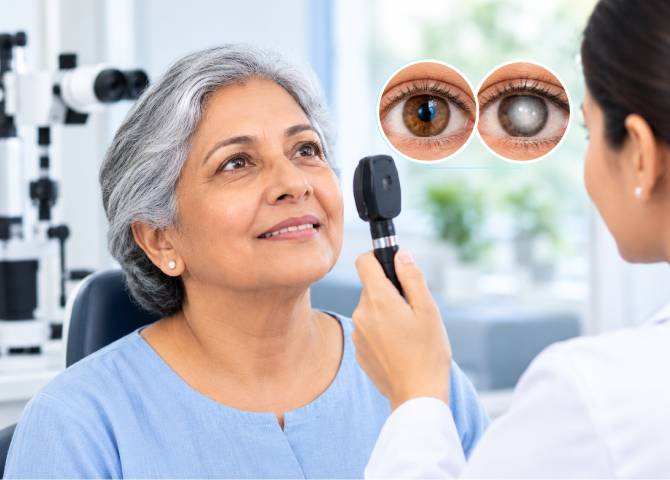
Cataracts and Age-Related Vision Changes
As we grow older, changes in vision can become a natural part of aging. You may notice that reading small text becomes more difficult, bright lights feel uncomfortable, or your vision appears less sharp than it once was. While some vision changes are associated with normal aging, others may be linked to eye conditions such as cataracts.
Cataracts are one of the common causes of vision changes among older adults. They develop when the normally clear lens inside the eye becomes cloudy, gradually affecting the quality of vision. Understanding the difference between age-related vision changes and cataract-related symptoms can help you seek appropriate eye care at the right time.
At Venus Eye Hospital, Dr. Richa Patel focuses on comprehensive eye evaluation and personalized care to help patients understand changes in their vision and explore appropriate treatment options.
How Does Ageing Affect Your Vision?
The eyes naturally undergo several changes with age. The ability to focus on nearby objects may gradually decrease, and some people may need reading glasses or changes in their existing prescription.
Other common age-related changes can include:- Difficulty reading small print
- Needing brighter light for close-up activities
- Increased sensitivity to glare
- Difficulty adjusting between bright and dim environments
- Changes in near vision
- Slower adjustment to darkness
These changes do not necessarily mean that a serious eye condition is present. However, persistent or progressive changes in vision should be evaluated by an eye specialist.
What Are Cataracts?
A cataract occurs when the natural lens of the eye becomes cloudy. Because the lens helps focus light onto the retina, clouding of the lens can gradually reduce the clarity of vision.
Cataracts commonly develop with increasing age, although other factors may also contribute to their development. Cataracts can progress slowly, so some people may not notice significant changes during the early stages.
As the cataract develops, vision may gradually become hazy, blurred or less clear.
Common Signs of Cataracts
Recognizing changes early can encourage timely evaluation. Common symptoms may include:- Blurred or cloudy vision
- Increased sensitivity to bright lights
- Difficulty seeing clearly at night
- Halos around lights
- Faded or less vibrant colours
- Frequent changes in glasses prescription
- Difficulty reading or performing detailed tasks
- Reduced clarity while driving, particularly at night
Not everyone experiences the same symptoms, and the severity can vary from person to person.
Cataracts vs. Normal Age-Related Vision Changes
It can sometimes be difficult to determine whether a vision change is simply related to aging or caused by an eye condition.
For example, needing reading glasses as you get older can be related to a normal age-related change in the eye's focusing ability. However, progressively cloudy vision, increasing glare or difficulty seeing clearly at night may indicate a cataract or another eye condition.
A comprehensive eye examination can help identify the underlying cause rather than assuming that every vision change is simply part of getting older.
Why Regular Eye Check-Ups Matter With Age?
Regular eye examinations become increasingly important as we age. An eye examination does more than determine whether you need a stronger glasses prescription. It can help an ophthalmologist assess different parts of the eye and identify changes that may require further attention.
Depending on your age, symptoms and individual risk factors, your eye specialist may evaluate:- Visual clarity
- Eye pressure
- The cornea and other front structures of the eye
- The natural lens
- The retina and optic nerve
- Overall eye health
Early evaluation can help detect eye problems before they significantly interfere with daily activities.
When Should You Consult an Eye Specialist?
You should consider scheduling an eye examination if you notice a persistent or progressive change in your vision.
Particular attention should be given to symptoms such as:- Increasingly blurred vision
- Difficulty seeing at night
- New or worsening glare
- Frequent changes in vision
- Difficulty reading despite updated glasses
- A noticeable decline in everyday visual clarity
Sudden changes in vision should receive prompt medical attention.
Taking Care of Your Eyes as You Age
Healthy lifestyle habits can support overall eye health. Regular eye examinations, managing existing health conditions, protecting your eyes from excessive sunlight and following professional recommendations can all be part of a good eye-care routine.
It is also important not to ignore gradual changes simply because they seem to be a normal part of aging. A professional examination can help determine what is actually causing the change.
Choose Comprehensive Eye Care With Dr. Richa Patel
Age-related vision changes do not affect everyone in the same way. Understanding your symptoms and receiving an appropriate eye examination can help you make informed decisions about your eye health.
At Venus Eye Hospital, Dr. Richa Patel provides comprehensive eye care with an emphasis on accurate evaluation and personalized treatment planning. If you are experiencing gradual changes in vision or symptoms associated with cataracts, a professional eye examination can help determine the appropriate next step.
Clear vision starts with understanding your eye health. Schedule a comprehensive eye examination and discuss your vision concerns with Dr. Richa Patel at Venus Eye Hospital.

 ×
×